Go Birding with Saudi Birding


Upcoming
Departures
March 30 - April 6, 2027
Pairs with: Arabian Endemics (April 8 - 16, 2027 )
March 28 - April 4, 2028
Pairs with: Arabian Endemics (April 6 - 14, 2028 )
At a Glance
Duration: 8 days
Group Size: Maximum 10 participants
Start/End: Jeddah (JED)
Habitats: Coastal plains; highland plateau; Hajhir Mountains
Targets: All 9 Socotra endemics and the Abd al Kuri Sparrow; endemic subspecies; resident and wintering Afrotropical and Indomalayan species
Climate: Warm to very warm along the coasts; cooler, more comfortable temperatures in the Hajhir Mountains
Physical Level: Moderately difficult hiking possible in the mountains
Transport: SUVs throughout
Photography: Excellent opportunities for endemic species and dramatic mountain and coastal landscapes


Tour Overview
Dubbed “the Galápagos of the Indian Ocean,” the Socotra Archipelago is one of the most remarkable island ecosystems on Earth. Its four main islands—Socotra, Darsah, Samhah, and Abd al Kuri—rank among the world’s richest remote island chains for endemic life, placing fifth globally after New Zealand, Hawaii, New Caledonia, and the Galápagos themselves. While many of these unique organisms are plants and insects—including the famous Dragon’s Blood Tree (Dracaena cinnabari)—the archipelago also hosts an exceptional suite of endemic birds that has made Socotra one of the most exciting birding destinations in Arabia.
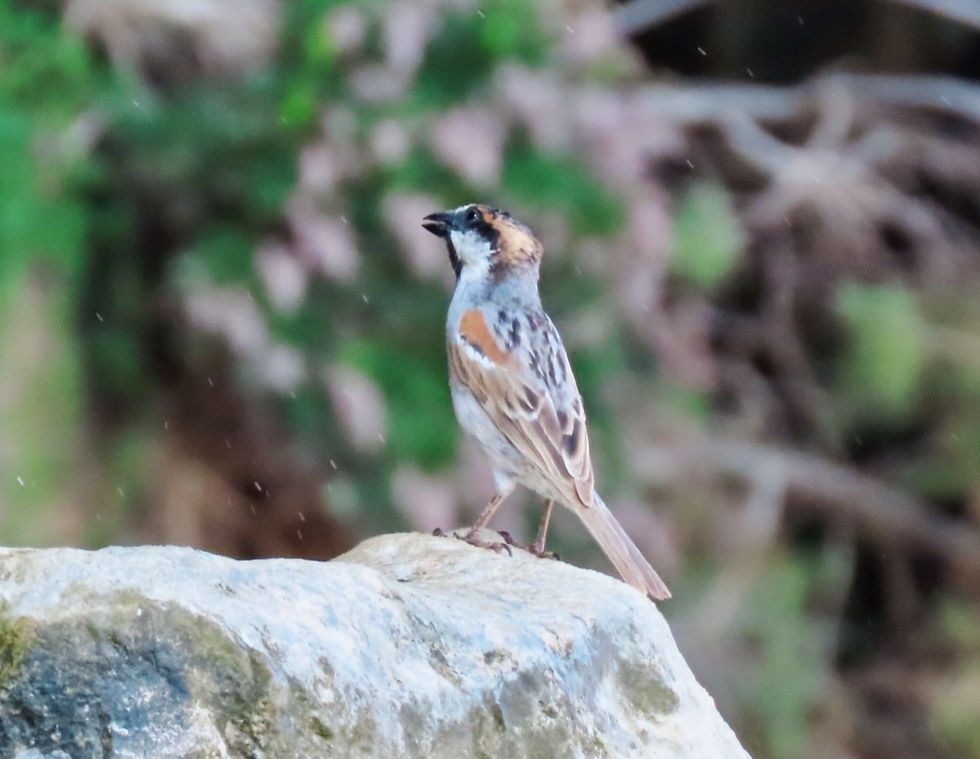
During this eight-day tour we target the nine endemic birds found on Socotra proper: Socotra Buzzard, Socotra Scops-Owl, Socotra Warbler, Socotra Cisticola, Socotra Starling, Socotra Sunbird, Socotra Sparrow, Socotra Grosbeak, and Socotra Bunting. If conditions allow, we will also attempt a crossing to the remote island of Abd al Kuri in search of the archipelago’s tenth endemic, Abd al Kuri Sparrow. Additional highlights include regional subspecies of Laughing Dove, Nubian Nightjar, Great Gray Shrike, and Long-billed Pipit, which may represent future taxonomic splits.
Beyond these island specialties, Socotra’s birdlife reflects its position at the crossroads of the Afrotropical and Indomalayan realms. African influences are evident in species such as Bruce’s Green-Pigeon, Forbes-Watson’s Swift, Somali Starling, Socotra White-eye, and Cinnamon-breasted Bunting, while eastern influences appear in birds like Pheasant-tailed Jacana, Cotton Pygmy-Goose, Yellow Bittern, and Indian Pond-Heron. Offshore waters also host a variety of seabirds, including Red-billed Tropicbird, Jouanin’s Petrel, Persian Shearwater, Masked Booby, and Socotra Cormorant.
Along the way we also explore the island’s distinctive cultural landscape—visiting coastal and mountain villages and learning about the Socotri language, one of the endangered Modern South Arabian languages, reflecting the archipelago’s long history of isolation in the Arabian Sea.
Featured Trip Reports
What Our Clients Say

"Thank you for organising an amazing trip to Socotra and Abd al Kuri, despite all the pre-trip hurdles put in your way. It really was a hugely enjoyable adventure, with great company and excellent logistics from the local ground agent. Your knowledge not only of the birds, but also of the endemic flora and other fauna, as well as the local culture, greatly enriched my experience during the visit."
Aidan G. Kelly, March 2026 Socotran Endemics Tour